Create your free account

Enter your email and we'll send a 6-digit code — no password needed.
We only keep your email and the username you choose. We never share or sell your email, and we don't send marketing — we use it only to email you a sign-in code. Read our privacy policy.
Charting the system…

HD 110067

a real G-star system, 105 light-years away6 planets← All exoplanets
Host star

HD 110067

Type
G-type (Yellow (Sun-like))
Spectral type
K0.0 V
Temperature
5,266 K
Radius
0.788 ☉
Mass
0.798 ☉
Known planets
6
Luminosity
0.434 ☉

Published by the NASA Exoplanet Archive. These planets’ temperatures and habitability scores are computed from this star’s measured luminosity, not from a stand-in for its class.
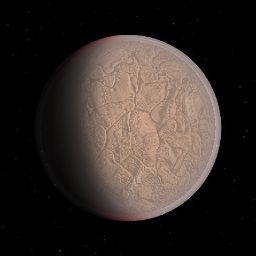
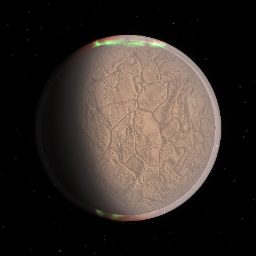
HD 110067 b — 0.08 AUHD 110067 c — 0.10 AUHD 110067 d — 0.14 AUHD 110067 e — 0.18 AUHD 110067 f — 0.22 AUHD 110067 g — 0.26 AUHD 110067 bHD 110067 cHD 110067 dHD 110067 eHD 110067 fHD 110067 g
HD 110067 b
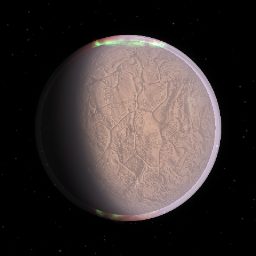
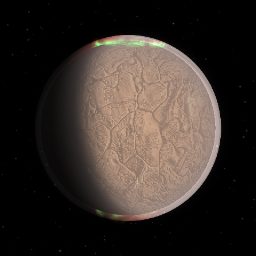
HD 110067 bBarrenHabitability 6 · Uninhabitable0.08 AU · 5.69 M⊕
HD 110067 c
HD 110067 cBarrenHabitability 10 · Uninhabitable0.10 AU · 6.3 M⊕
HD 110067 d
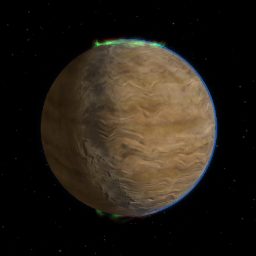
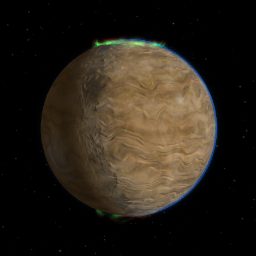
HD 110067 dIce GiantHabitability 9 · Uninhabitable0.14 AU · 8.52 M⊕
HD 110067 e
HD 110067 eBarrenHabitability 25 · Extremely Harsh0.18 AU · 3.9 M⊕
HD 110067 f
HD 110067 fBarrenHabitability 33 · Extremely Harsh0.22 AU · 5.04 M⊕
HD 110067 g
HD 110067 gIce GiantHabitability 16 · Uninhabitable0.26 AU · 8.4 M⊕
A binary star system's orrery: two suns close together, a red dashed dead-zone boundary, and a debris trail left by a destroyed world

New: Binary Star Systems 🌀

A system can now orbit two suns. Add a companion star when you build one — close, medium, or wide — and the physics decides what survives: a shared center of mass carves out a dead zone where gravity from both stars tears a world apart, leaving it as debris, and every surviving planet's orbit goes elliptical, moving fastest at closest approach and slowest out at aphelion. Push the separation to wide and the dead zone opens tens of AU across, wide enough to gut a system that would have been stable around one star alone. Stand on a world that made it through and you'll watch two suns cross the sky together.

Create your free account

Enter your email and we'll send a 6-digit code — no password needed.
We only keep your email and the username you choose. We never share or sell your email, and we don't send marketing — we use it only to email you a sign-in code. Read our privacy policy.

Send feedback

We're still building out the best experience we can — and we'd love your input. Tell us about features you enjoy, ideas you'd like to see, or pain points where something feels off, and we'll know where to look next.

Type
Idea
Bug
Pain point
Other